
A sharp chainsaw is a formidable tool. A dull chainsaw is frustrating and dangerous. Here are a few tips you can use to keep your chain saw sharp and cutting efficiently.
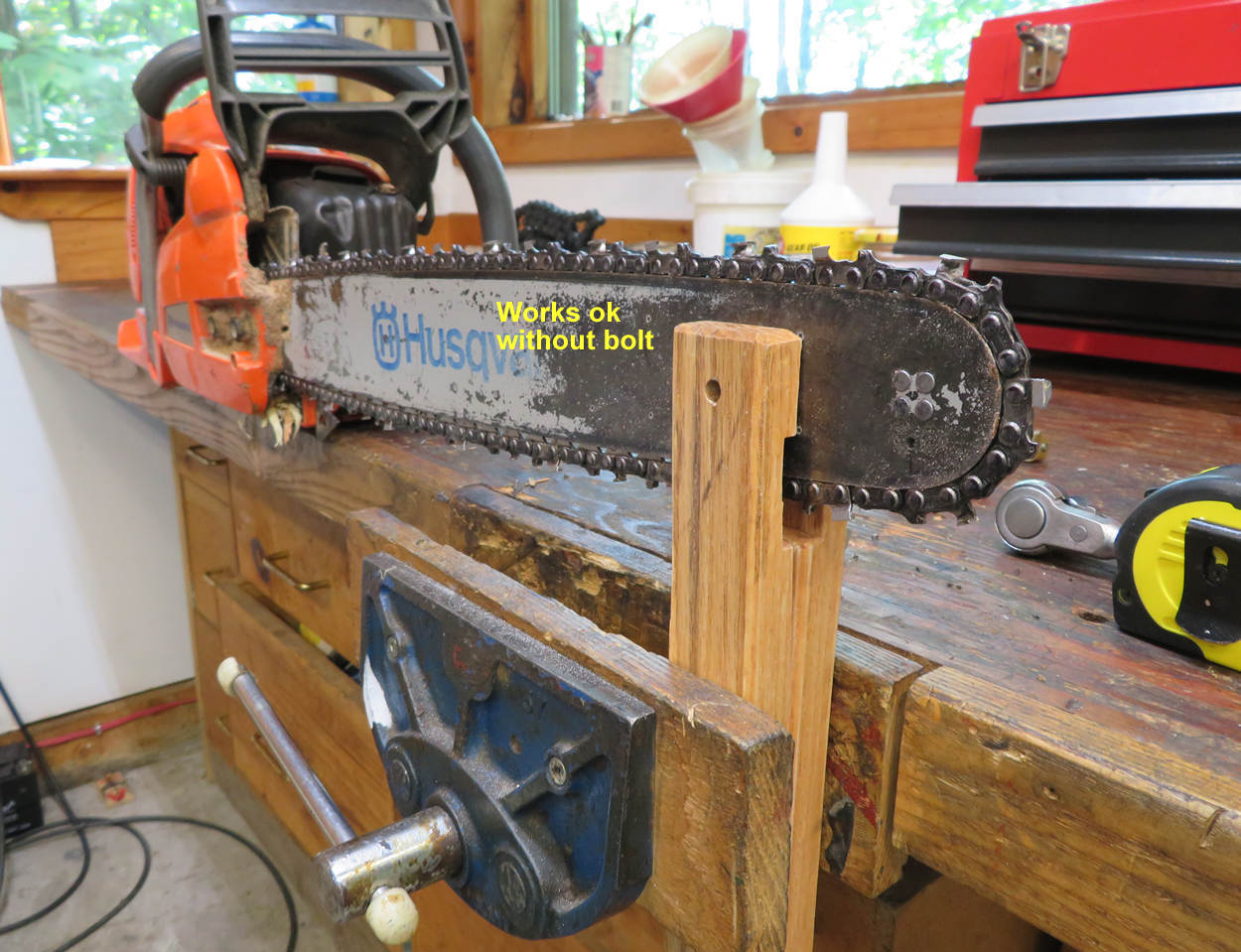
We've all touched up chains out in the woods with our saw propped up against a couple pieces of firewood, but it's a big advantage in the shop to hold the saw firmly and leave both hands free for sharpening.
I made a wooden clamp with "jaws" that grip the chain saw bar and still allow the chain to be turned. It's held in a bench vise and keeps the saw firmly in position while I sharpen.
A jig's parallel lines give visual cues to help keep the file at the proper angle for an accurate sharpening. The other big benefit of using a jig is that it provides an easier and better grip on the file.
The Husqavarna sharpening jig pictured below holds two files: a round file that sharpens the teeth gullets, and a flat file that simultaneously lowers the profile of the rakes.
Rakes are the "shark fins" in front of each cutting tooth. The height of the rakes regulates how deeply the teeth will cut in a log. Too deep a cut will stall out the saw, too little wastes time and fuel.
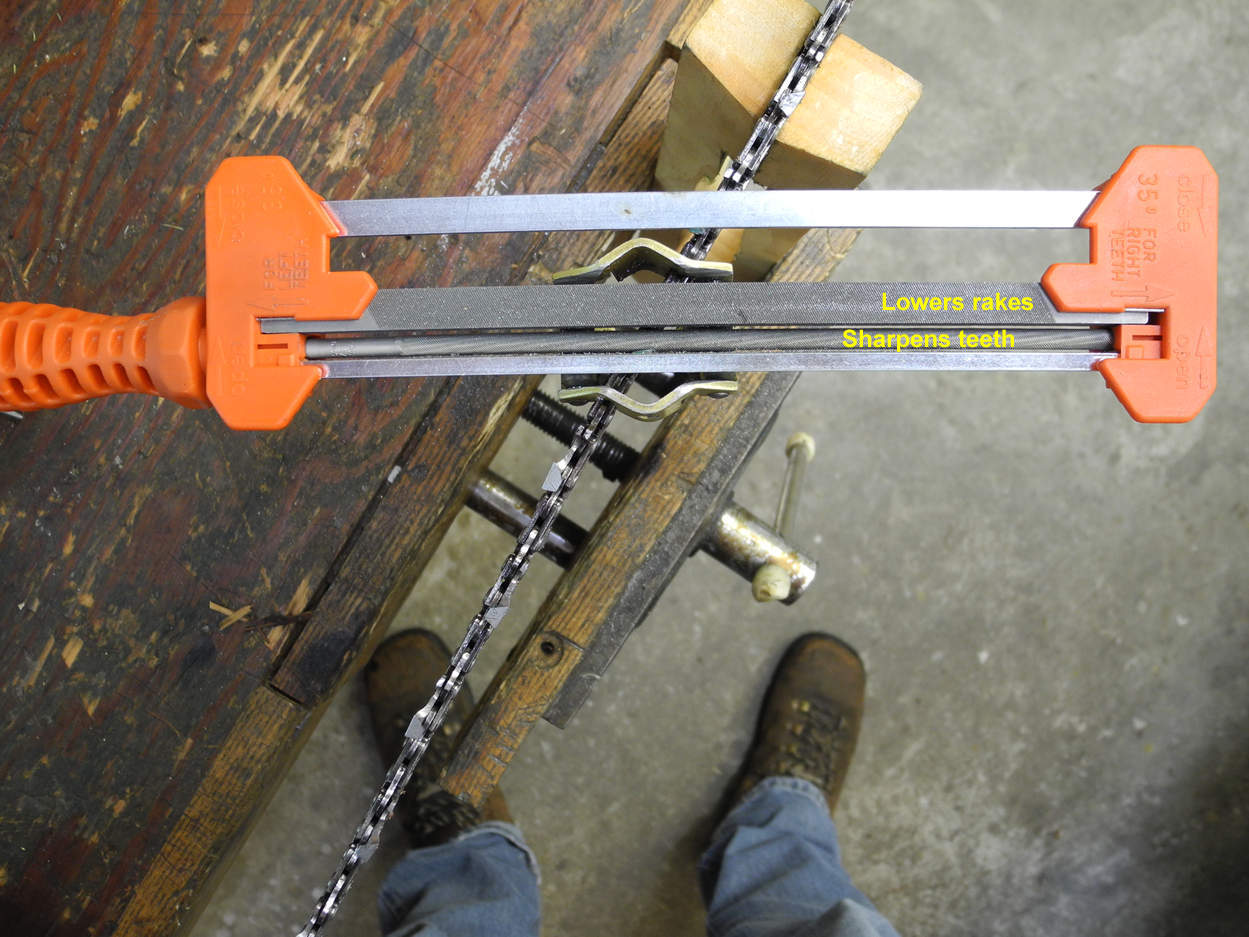
I use a second jig in conjunction with the Husqvarna unit. The second jig has two rollers for the round file to run on and it clips right over the tooth being sharpened. It's designed so that when positioned on a tooth its sides are at the correct sharpening angle.
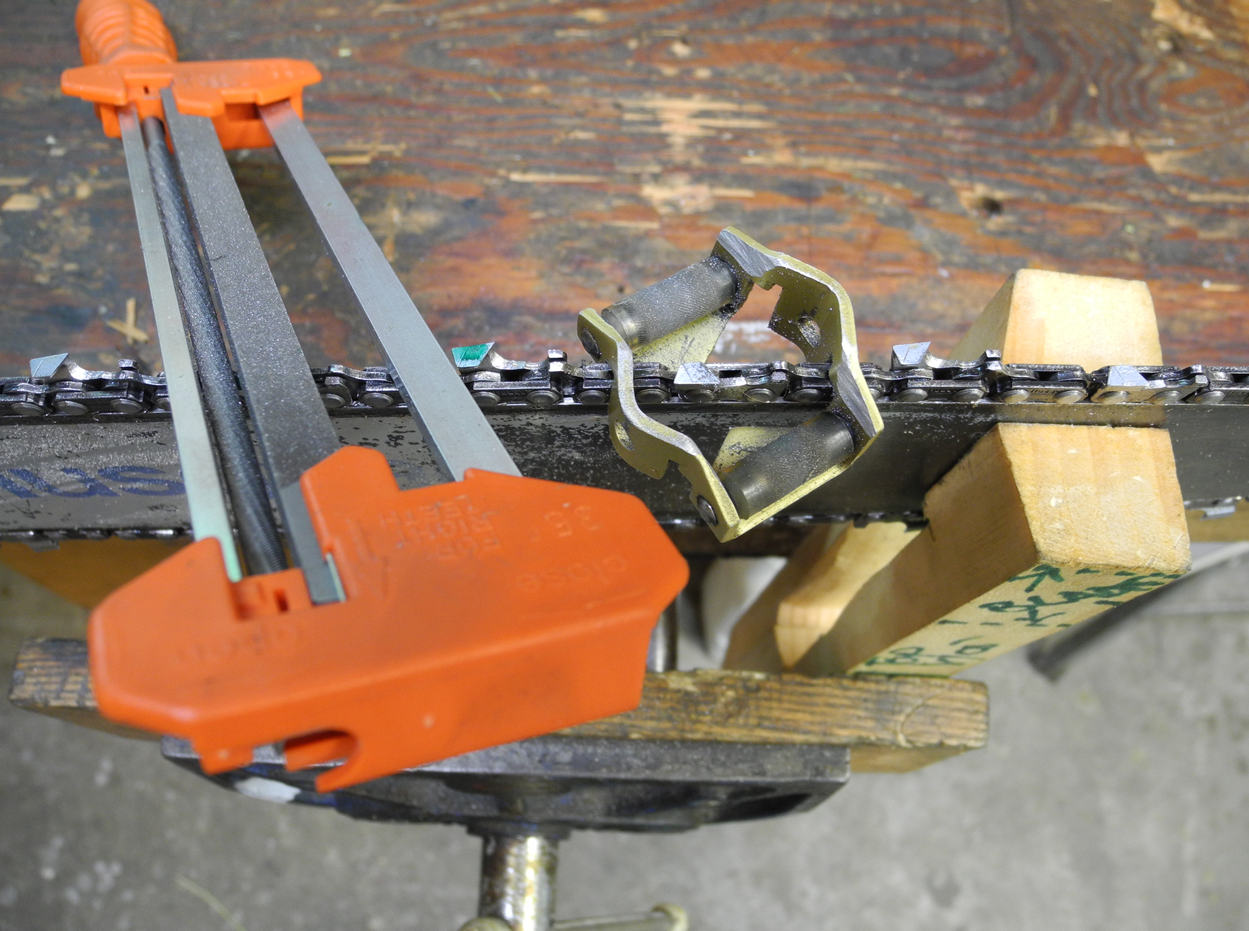
The angle to which the tooth gullets are sharpened is critical to the saw's cutting efficiency. I maintain an accurate and correct sharpening angle by lining up the parallel lines on both jigs as shown below.
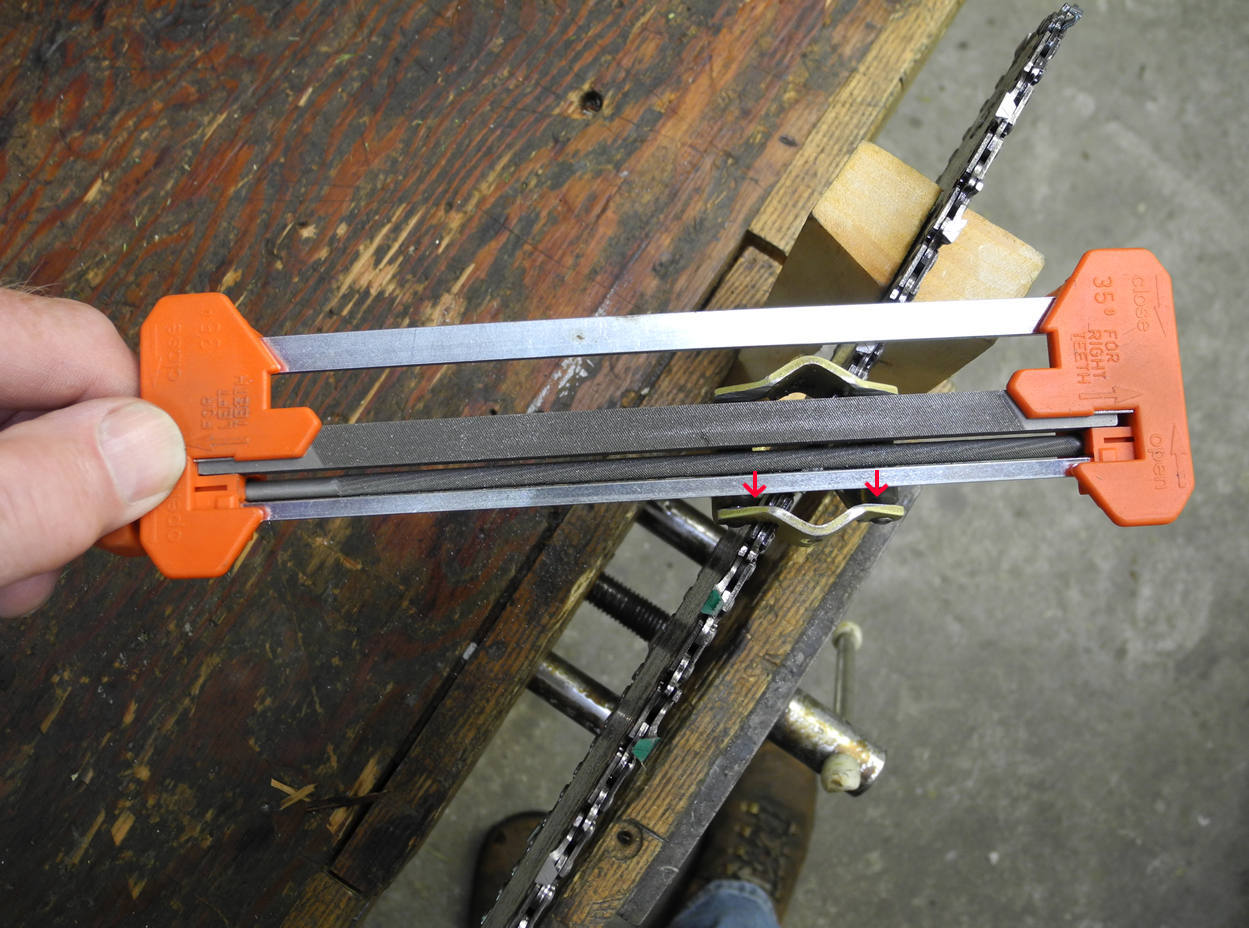
Keep things light - don't use heavy pressure on the file. Firm, not heavy pressure on the file gives more precise control than bearing down hard.
Count file strokes and give every tooth the same number using the same pressure. This will help keep chain wear even for straight saw cuts. If the teeth on one side become more worn down than the other, give them two less strokes for several sharpenings to even things out.
I like to go around the chain twice on both sides.
The second sharpening goes very quickly and the finer edge made by the lighter strokes should give faster, cleaner cuts.
A second lap also helps gives each tooth more "average" strokes, helping even out inconsistencies in your technique.
Finally, don't try to sharpen every tooth perfectly. Give damaged teeth the same treatment as others - extra filing to eliminate damage lowers the tooth profile and it won't cut much anyway. Repair the damage over several filings.
Don't postpone sharpening until the chain is "dull". Lighter, more frequent sharpenings are quicker and keep your saw working at peak efficiency.
Avoid cutting rotten wood. Wood is earth transformed, and when it rots away it turns back to earth. Earth, stones, and rotten wood are natural enemies of sharp chain saws.
See you in the woods!