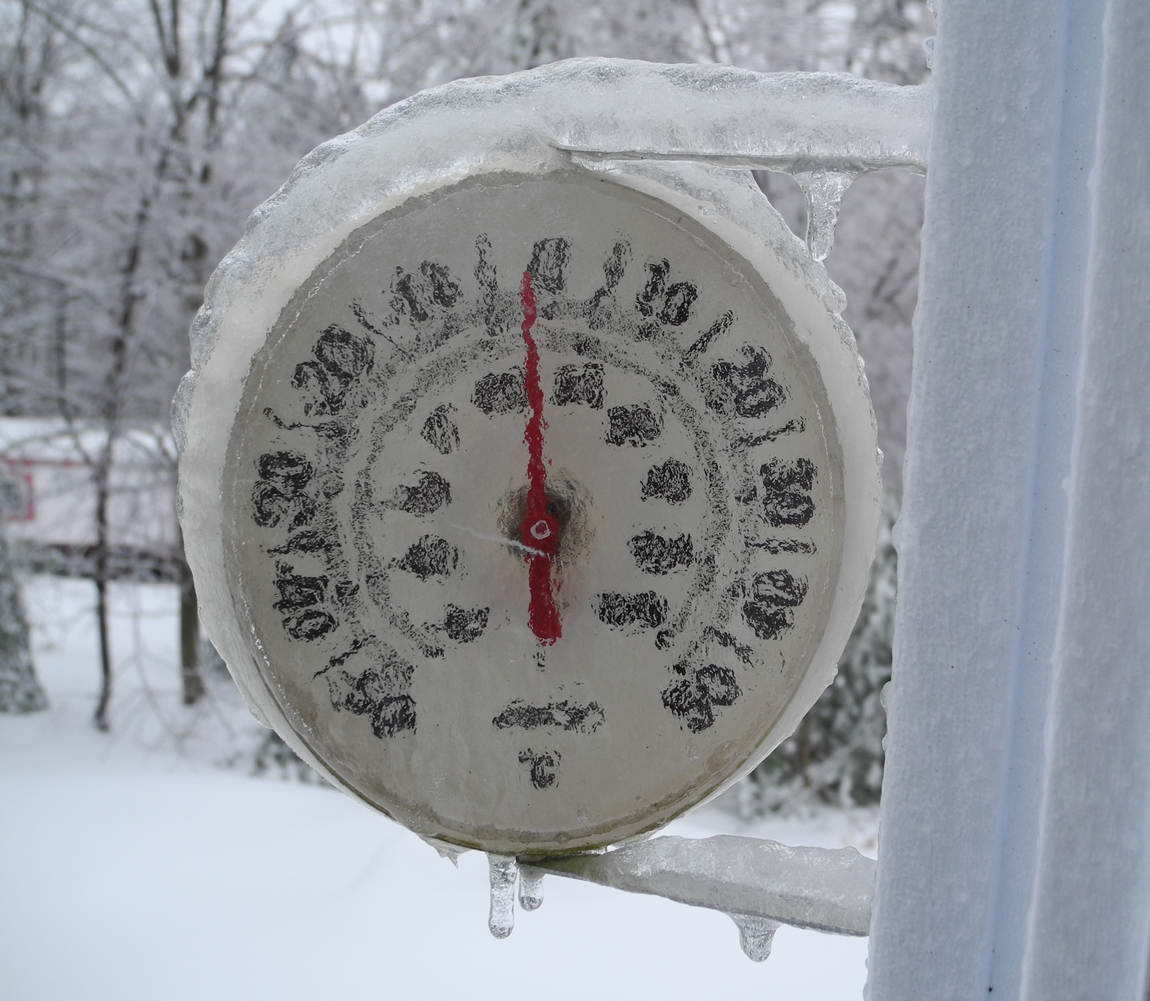

During the afternoon and evening of December 21st, 2013, Quebec's Eastern Townships experienced severe icing conditions due to heavy freezing rain.
Hydro-Quebec's power grid soon began sagging beneath the weight of accumulating ice and falling trees and branches and by the wee hours of December 22nd nearly 49,000 customers were without power, most of them in the Eastern Townships (Estrie) and Monteregie regions.
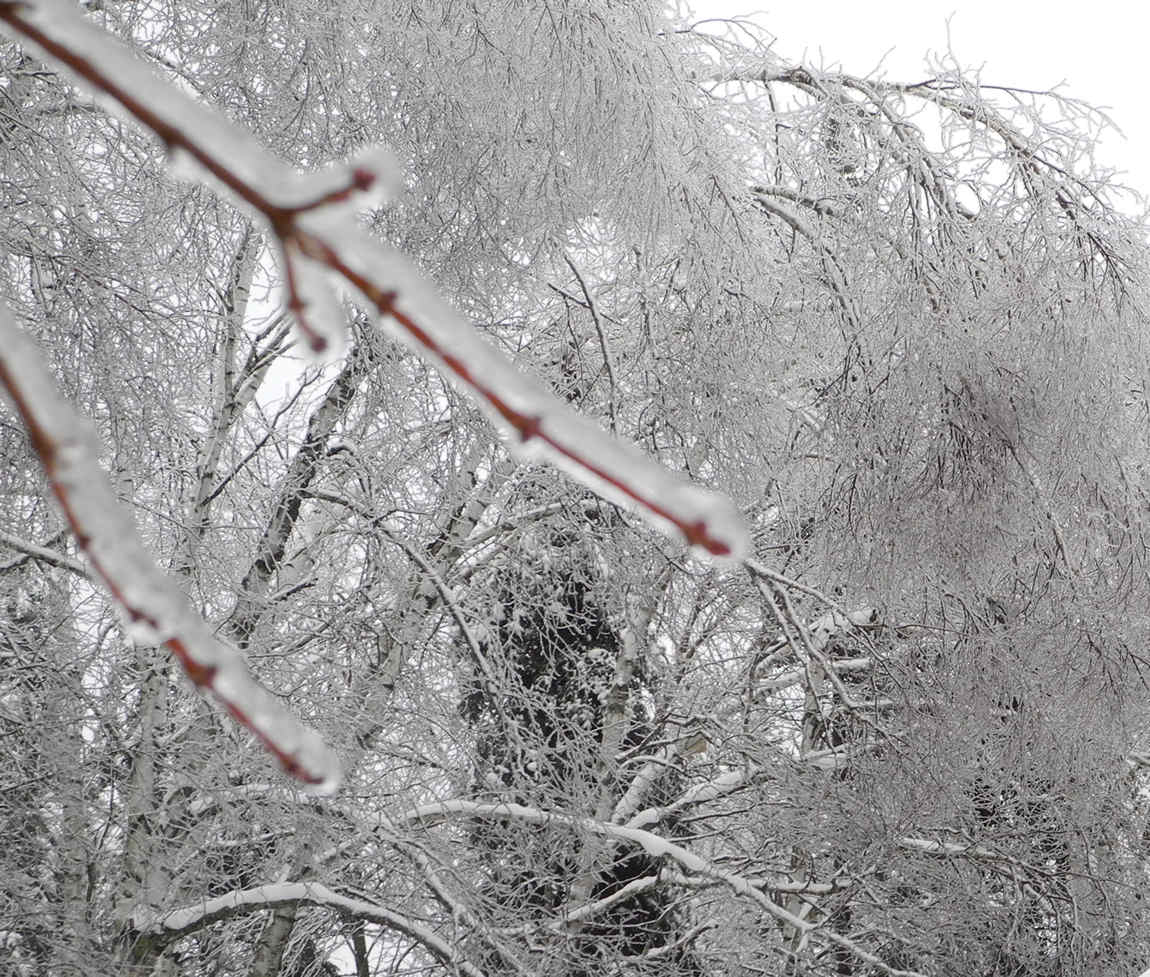
While most households had their power restored by the end of December 27th, our household was among the last thousand or so whose power didn't return until Sunday, the 29th of December, a week after it went down.
On our gravel road alone there were so many trees down along the four miles serviced by Hydro's lines that it took a major convoy of trucks with their crews more than two days to clear the lines.
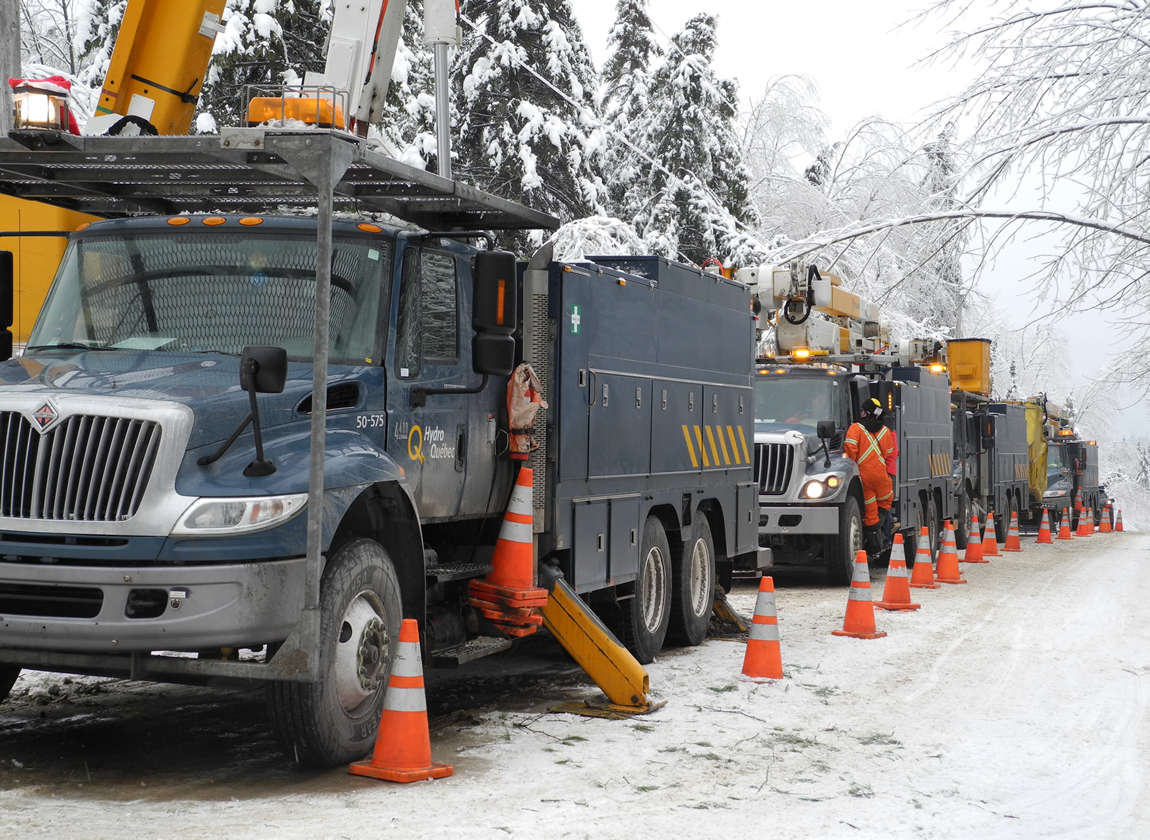
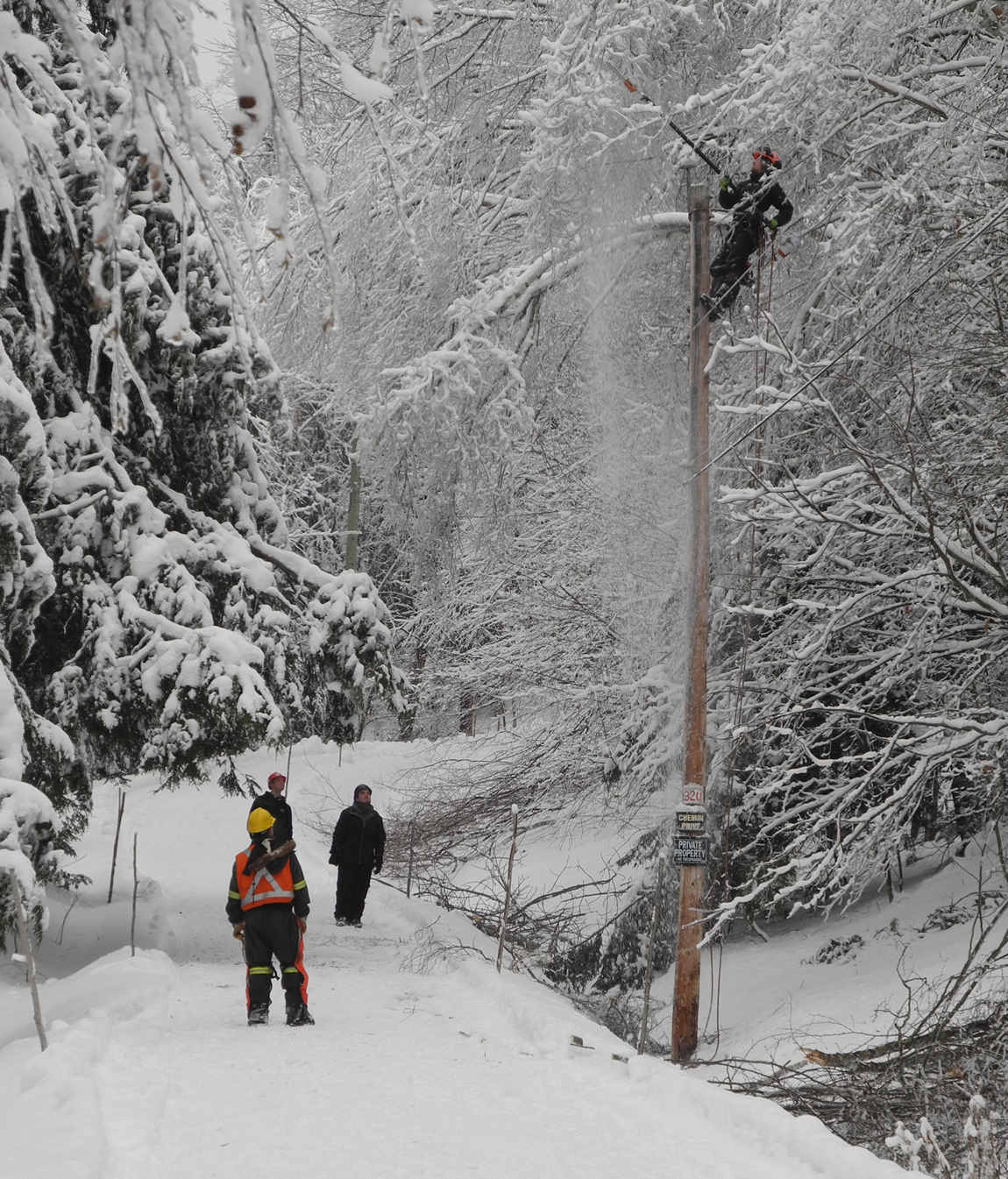
Power was restored to households on the municipal road early on the 28th, but it took over another day to clear off the two-thousand feet of Hydro lines that follow the steep, winding access road to the NewHouse. Fortunately the last four-hundred feet are underground.
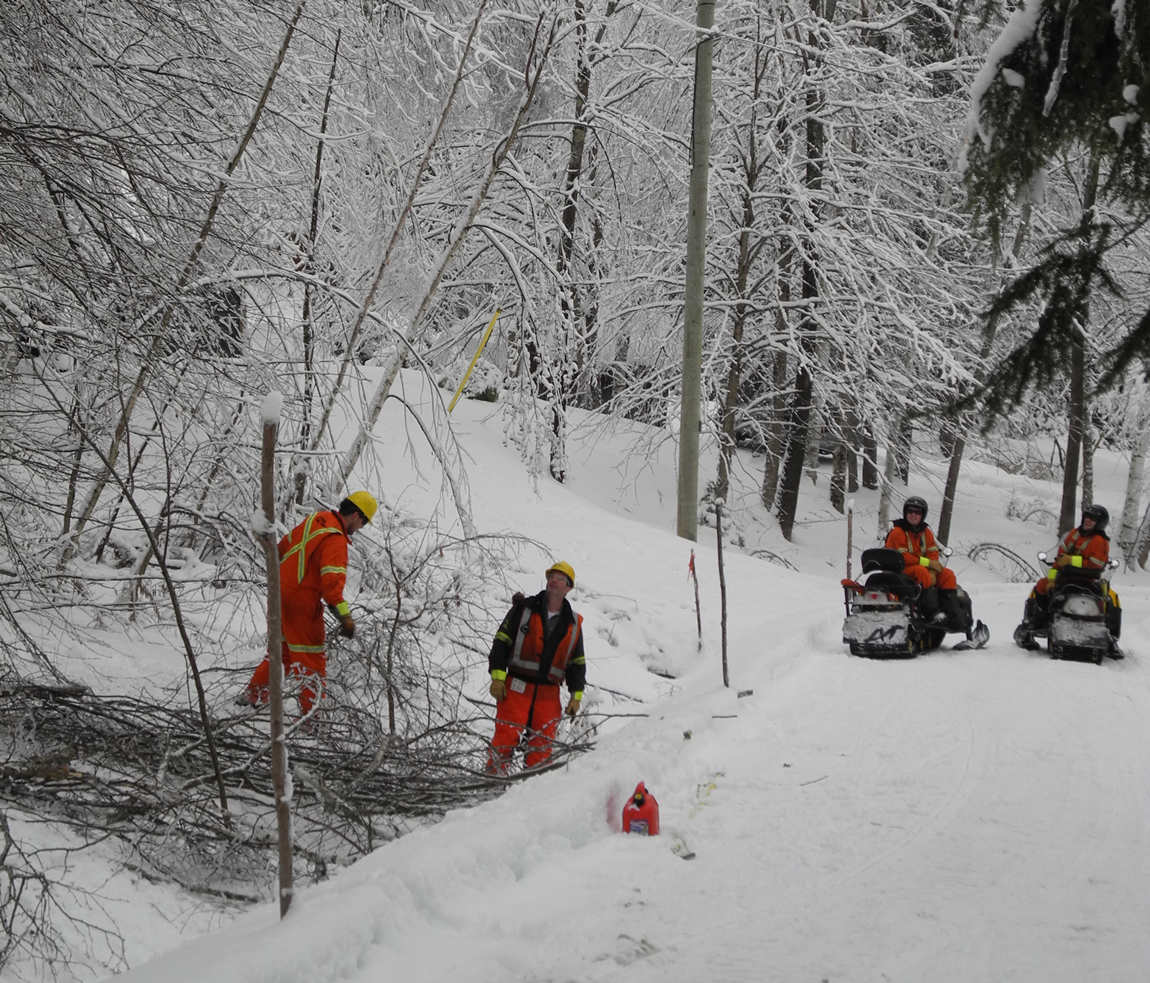
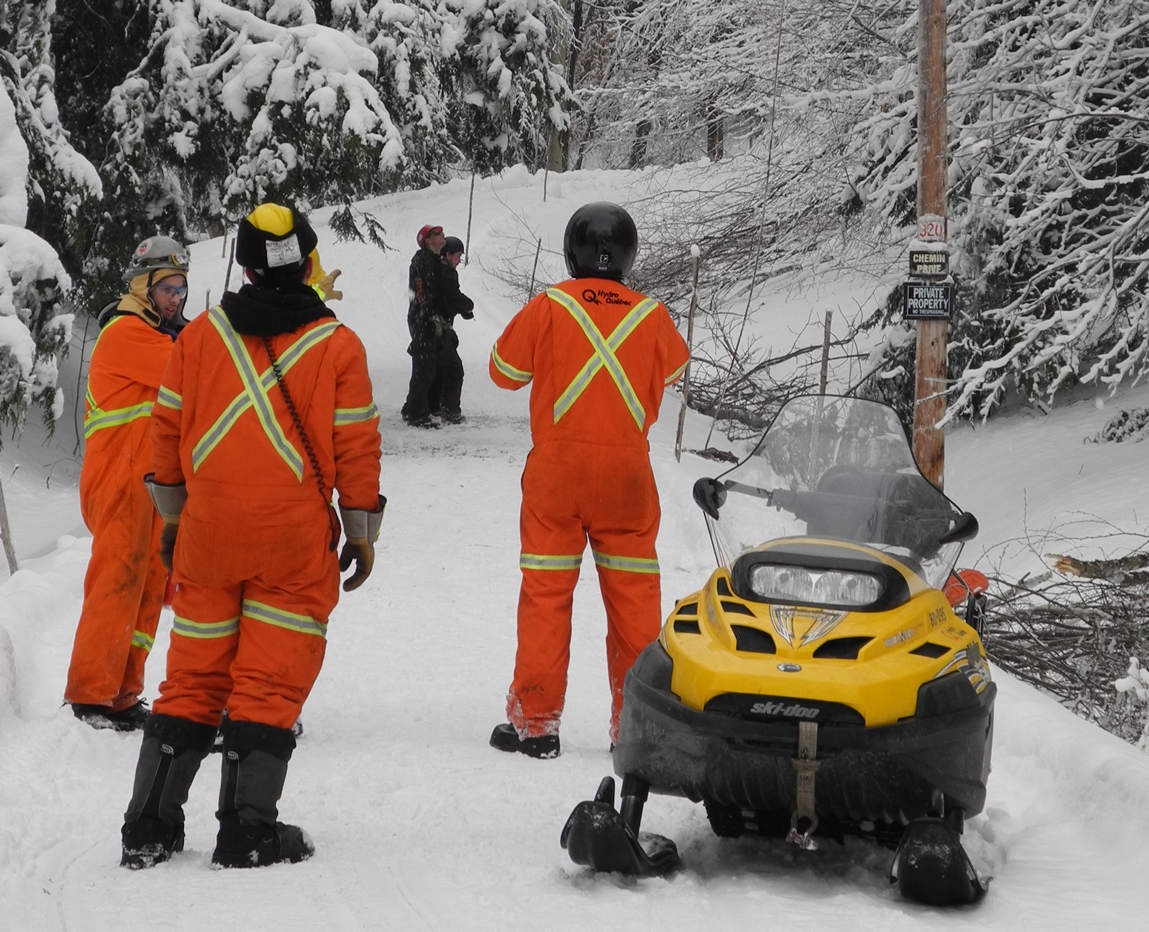
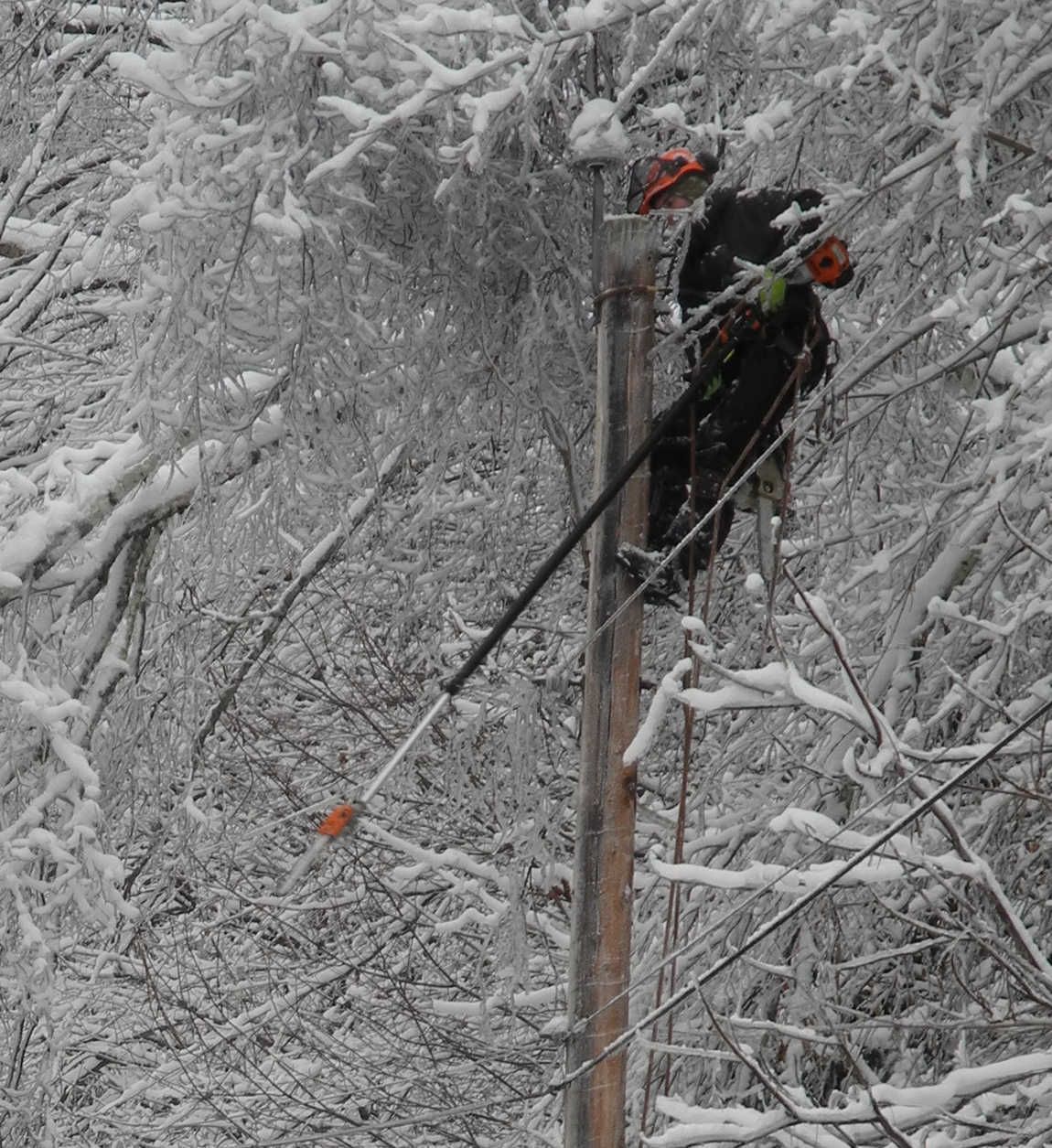
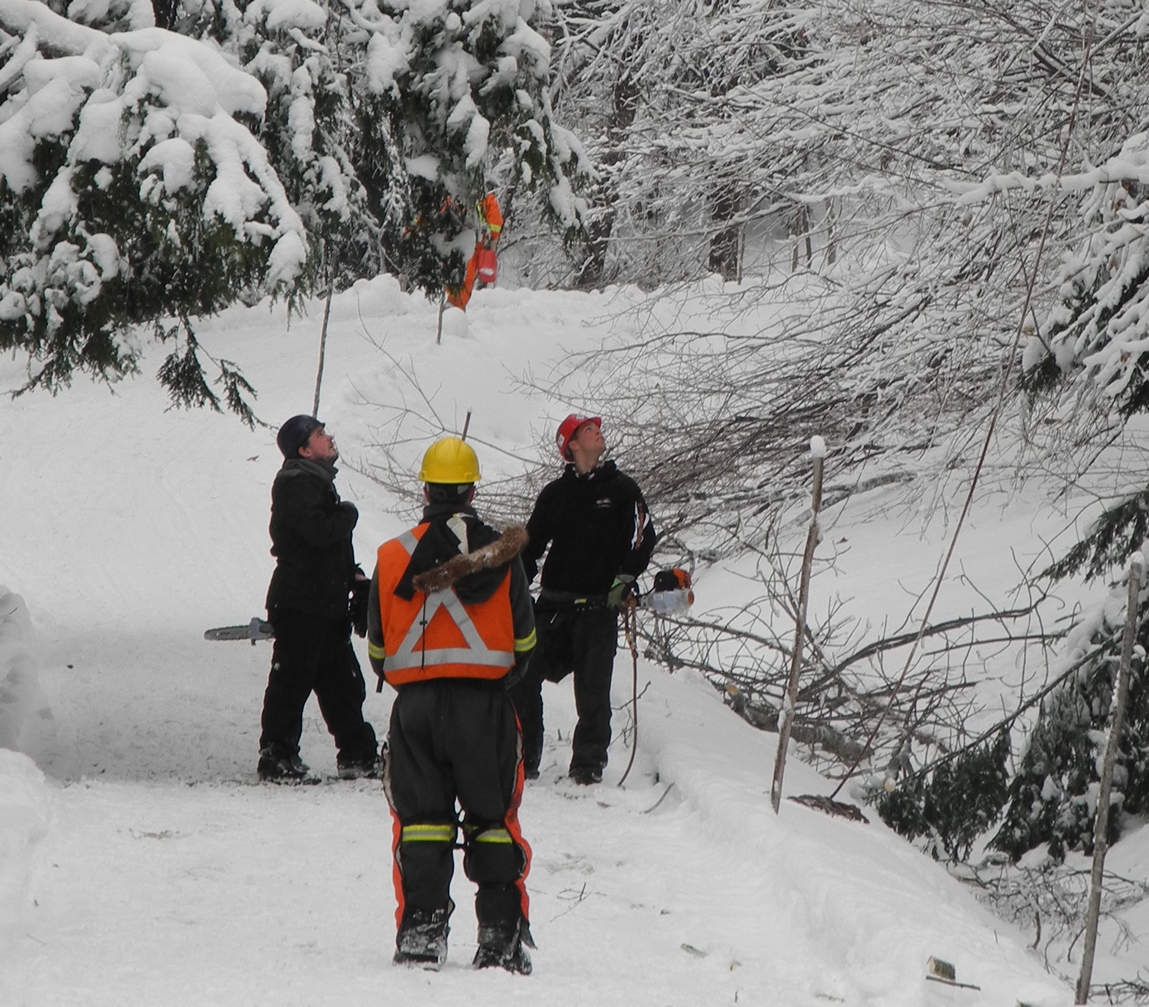
Below, a crew prepares to clear branches and trees off of the power lines on the lower part of the road.
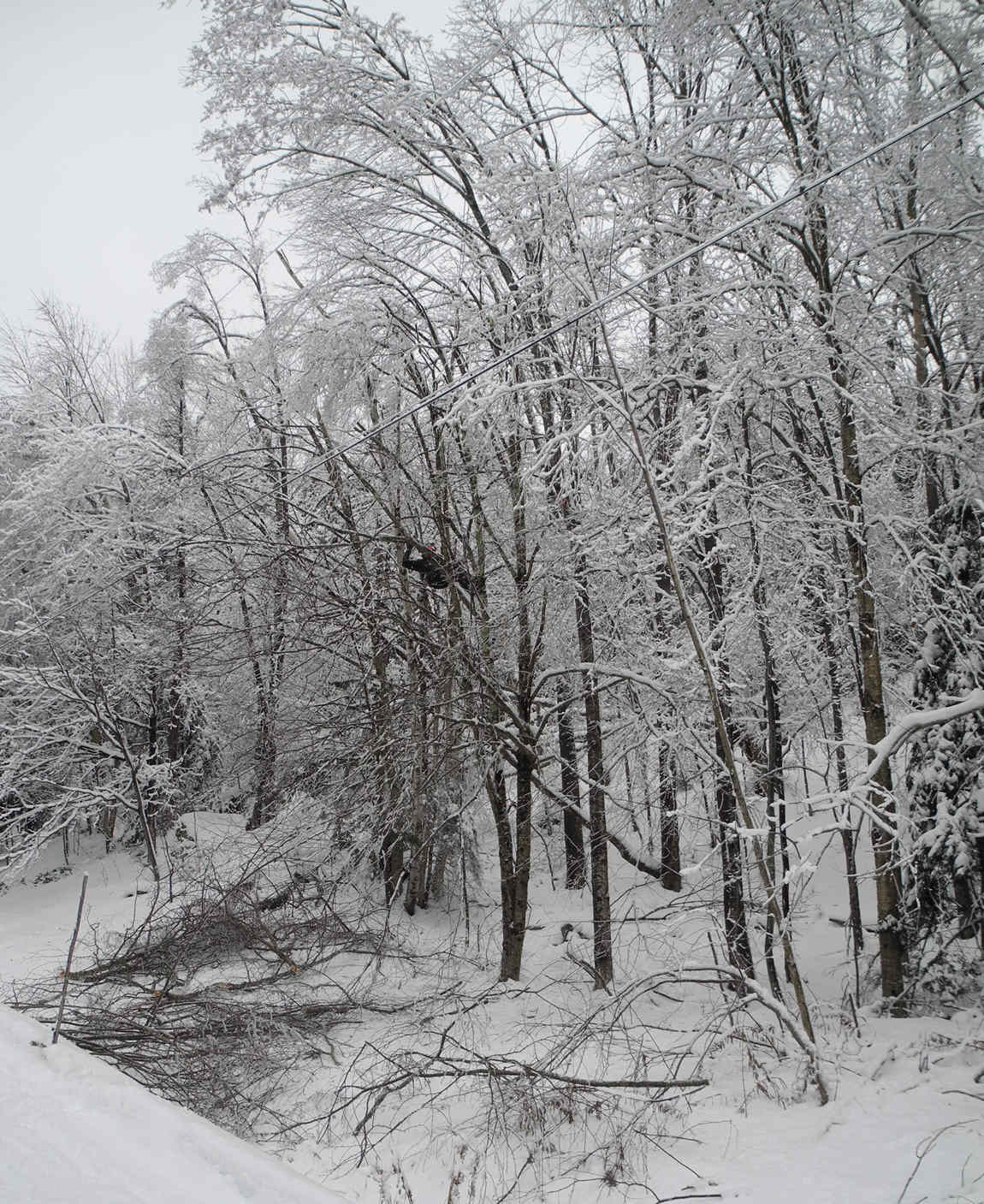
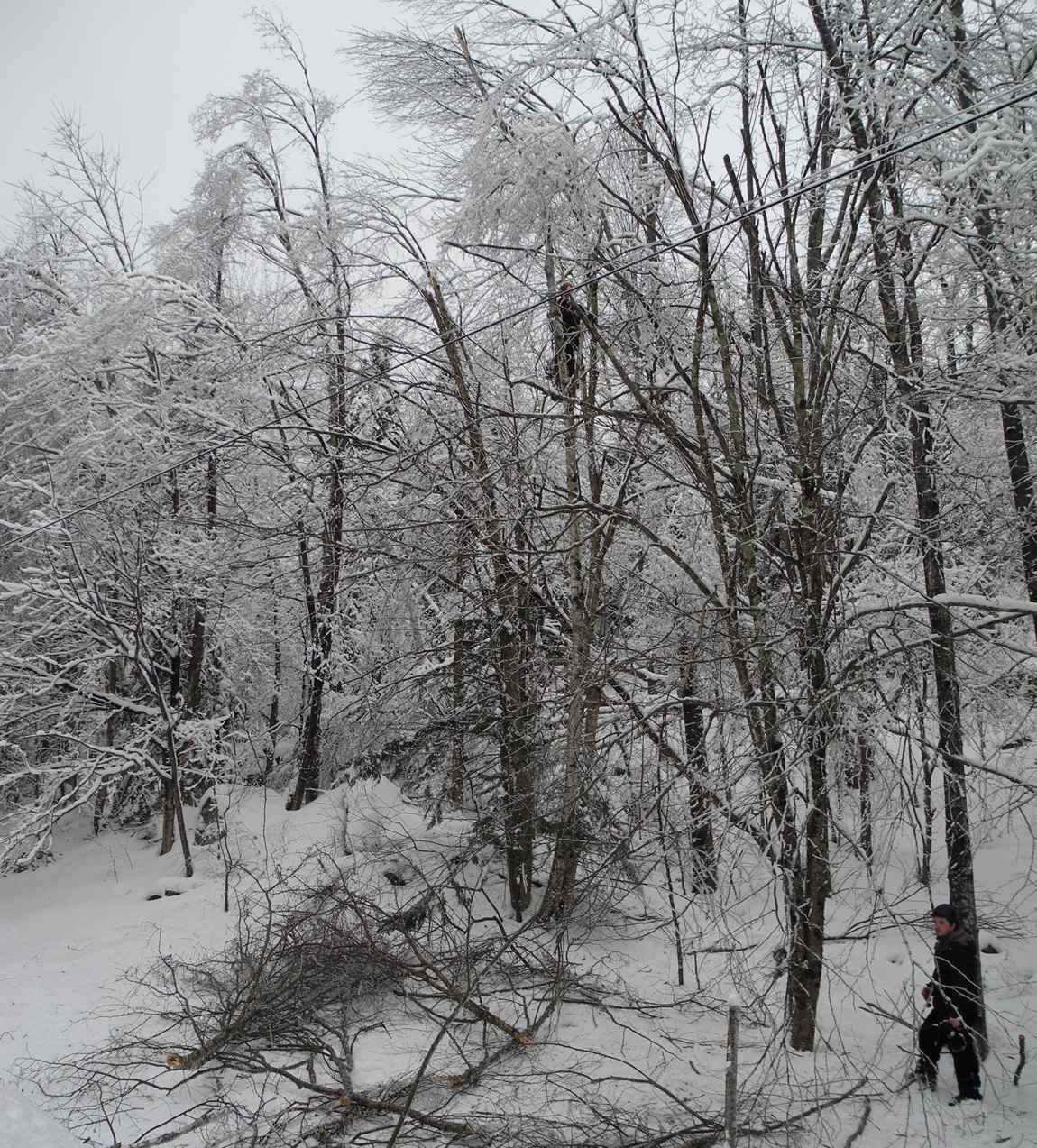
I learned from the ground crew that the chief aerial guy was contracted out of Montreal by Hydro to do the kind of work and climbing he's shown doing here.
Having previously lived for ten years without the benefit of electricity, running water, and other amenities such as telephone, the Hermits were not exactly overwhelmed by the prospect of a week-long Hydro Holiday.
We weren't going to be cold with two wood stoves to keep us warm and cook our meals.
We bashed a hole in the pond ice and hauled buckets of water up to the house by toboggan. Great exercise, great fresh air!
Pond water was used to flush or heated in buckets on the Findley kitchen range for use in washing dishes and taking "bucket baths" in the shower or tub.
The more hardy among us used the good old outhouse up behind the cabin, while others elected to flush with pond water. Wimps!
Potable water was another matter. Wanting to avoid Beaver Fever (Giardia) or other such upsets from surface water, we hauled the five gallons a day from the nearby village of Ayer's Cliff, whose municiple water system continued functioning with diesel power.
While most of the old cabin kerosene lamps are still around, they have all been dry for decades. No electric light can light a scene the way a kerosene lamp can. Alas, the open flame that imparts such beauty, such softness, such life, also spews particulate matter that our lungs find unacceptable.
We went with battery-powered electric light during those longest nights of the year nights. The best solutions lie in LED technology.
Liking that winter wardrobe. Hydro knows something about keeping the guys warm and dry.
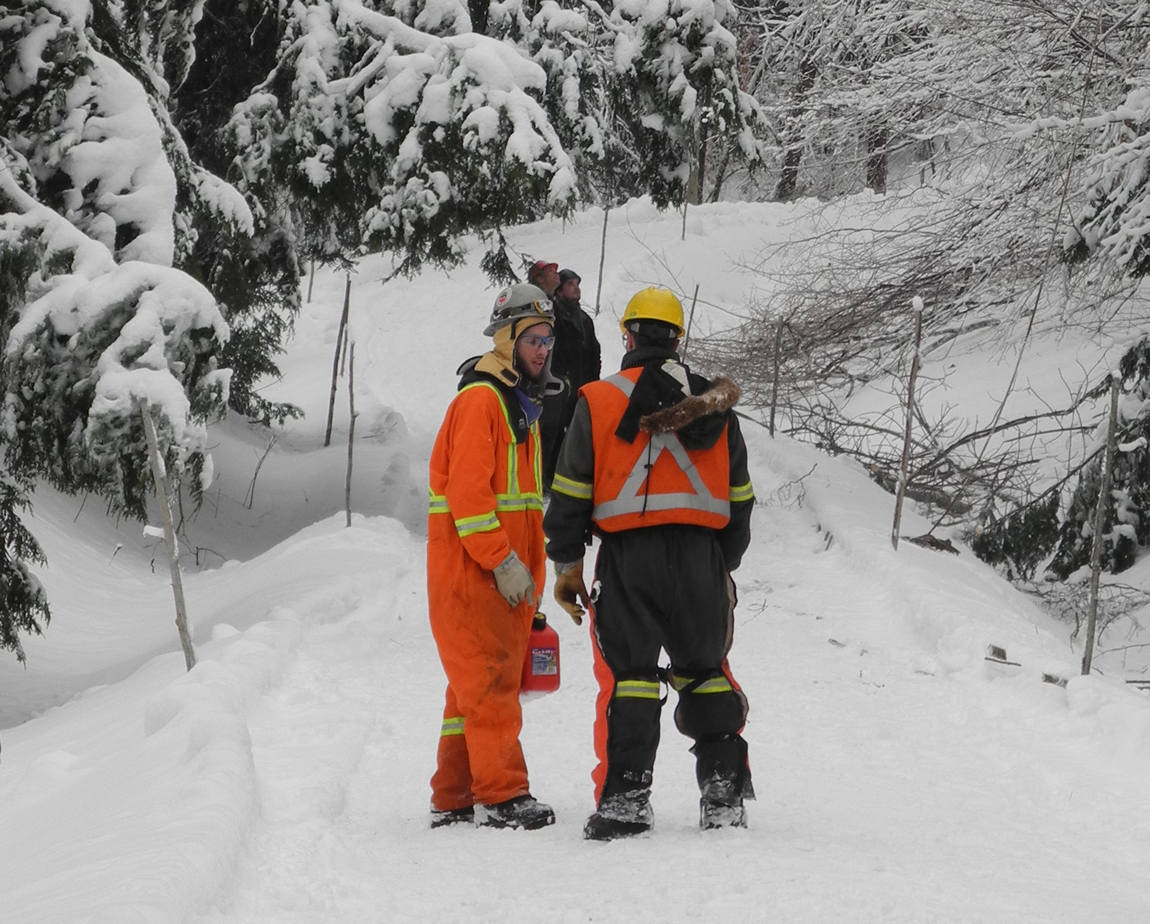
Didn't have my camera with me the first time I went down the hill so I missed photos of the part where the snow machine guys both got stuck just below the hairpin.